
合约继承
本章学习 Solidity 合约的继承。
封装、继承和多态是面向对象编程的三大特性。Solidity 作为一种面向对象的编程语言,它支持合约的继承。
合约继承是指一个智能合约从另一个智能合约中继承功能和属性,前者称为子合约,后者称为父合约。
通过合约继承,子合约能够重用父合约中已经定义的数据结构和代码逻辑,从而减少代码冗余,提高代码的可复用性。
1. 语法
在 Solidity 中,合约通过关键字 is 来继承其它合约:
contract child_contract is parent_contract {
    // ......
}
其中,child_contract 称为子合约或者继承合约,parent_contract 是父合约或者基础合约。
child_contract 继承了 parent_contract 的状态变量和函数,并根据实际需要,覆盖或扩展这些继承的部分。
我们以下面的智能合约为例,来学习继承合约:
// SPDX-License-Identifier: MIT
pragma solidity ^0.8.0;

contract Person{
  string public name;
  uint public age;
  function getSalary() public pure returns(uint){
    return 1000;
  }
}

contract Employee is Person {
}
在这个例子中,合约 Employee 继承了合约 Person 的所有状态变量和函数。其中,Employee 是子合约,而 Person 是父合约。
我们把合约代码复制到 Remix,进行编译,并部署到区块链上:
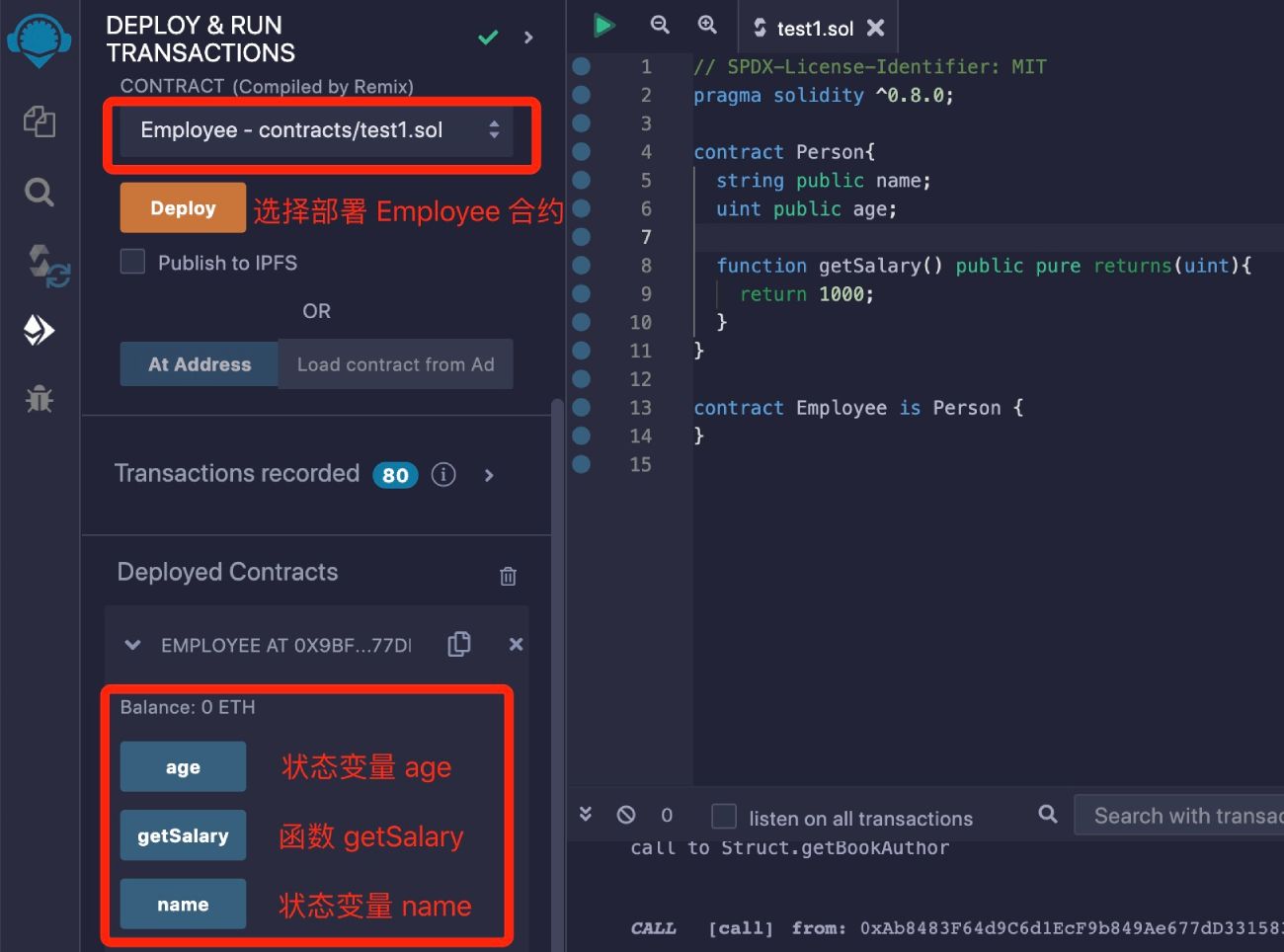
我们可以看到,虽然合约 Employee 中没有定义任何状态变量和方法,但是由于它继承了合约 Person ,所以在 Employee 中就自动拥有了状态变量 name、age 和方法 getSalary。
注意:子合约只能继承父合约中可见性为 public 、internal 和 external 的状态变量和方法,而可见性为 private 的状态变量和方法,是不能被子合约继承的。
2. virtual 和 override
Solidity 在合约继承的语法中,引入了 virtual 和 override 两个关键字,用于重写父合约中的函数。
父合约首先需要使用 virtual 关键字声明一个虚函数,然后,在子合约中使用 override 关键字来覆盖父合约的方法。
例如:
// SPDX-License-Identifier: MIT
pragma solidity ^0.8.0;

contract Person{
  string public name;
  uint public age;

  // 使用 virtual 声明此函数可以被子合约覆盖
  function getSalary() public pure virtual returns(uint){
     return 1000;
  }
}

contract Employee is Person {
    // 使用 override 表示此函数覆盖了父合约的同名函数
    function getSalary() public pure override returns(uint){
      return 3000;
  }
}
子合约 Employee 的 getSalary 方法覆盖了父合约 Person 的 同名方法。
我们调用子合约 Employee 的 getSalary 方法,输出结果是 3000,而不是父合约中的 1000。
在上面的例子中,如果父合约的方法不声明为 virtual,或者子合约的方法不声明为 override,那么在编译合约的时候就会报错。
3. 构造函数的继承
在 Solidity 中,如果父合约没有定义构造函数,或者构造函数没有参数,那么子合约可以直接继承父合约,无需显式调用父合约的构造函数。例如:
// SPDX-License-Identifier: MIT
pragma solidity ^0.8.0;

contract Person{
  constructor() { // 构造函数没有参数
  }
}

contract Employee is Person {
}
如果父合约的构造函数带有参数,那么子合约在继承父合约时,就需要在自己的构造函数中显示地调用父合约的构造函数。
子合约继承合约时,调用父合约的构造函数有两种方式:直接传值 和 传入输入值。
1)直接传值
// SPDX-License-Identifier: MIT
pragma solidity ^0.8.0;

contract Parent {
  uint public data;
  constructor(uint _data){
    data = _data;
  }
}

contract Child is Parent(1) {
}
2)传入输入值
// SPDX-License-Identifier: MIT
pragma solidity ^0.8.0;

contract Parent {
  uint public data;
  constructor(uint _data){
    data = _data;
  }
}

contract Child is Parent {
  constructor(uint _data) Parent(_data) {
  }
}
4. 调用父合约函数
子合约可以随时调用父合约中的函数,包括被覆盖掉的函数。
子合约调用父合约的函数有两种方法:使用关键字 super 和 使用合约名称。
// SPDX-License-Identifier: MIT
pragma solidity ^0.8.0;

// 父合约 Person
contract Person {
  function getSalary() public pure virtual returns(uint){
    return 1000;
  }
}

// 子合约 Employee
contract Employee is Person {
  function getSalary() public pure override returns(uint){
    return 3000;
  }

  function getPersonSalaryBySuper() public pure returns(uint){
    return super.getSalary(); // 使用 super 调用父合约函数
  }

  function getPersonSalaryByName() public pure returns(uint){
    return Person.getSalary(); // 使用合约名称调用父合约函数
  }
}
我们把合约代码复制到 Remix,进行编译,并将合约 Employee 部署到区块链上,然后调用函数 getSalary,返回的结果为 3000。
当我们调用函数 getPersonSalaryBySuper 和 getPersonSalaryByName 时,都会返回结果 1000,因为它们都调用了父合约 Person 中的函数 getSalary。